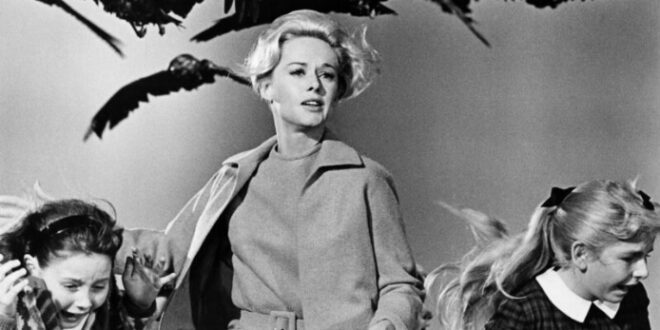
A 60-year milestone celebration gave me the opportunity to see Alfred Hitchcock’s #TheBirds on the big screen this past weekend. With a plot purportedly taken from a short story of the same name by Daphne du Maurier, writer of the book that inspired Hitchcock’s classic Rebecca, research shows that both the book and the film were inspired by a true seabird attack that affected Monterey Bay, California and its residents in 1961. More so, it shows that frenzied birds’ actions were likely due to an altered sense of reality due to some sort of brain injury.
While birds often run into glass and other such hard objects (as I can attest to, as it’s not uncommon for a bird to run into my living room windows), the affects are often imperceptible to humans. However, after studying the 1961 seagulls, an ocean environmentalist determined, “…plankton samples from the 1961 poisoning contained toxin-producing Pseudo-nitzschia, supporting the contention that these toxic diatoms were responsible for the bird frenzy that motivated Hitchcock’s thriller,”. Specifically, poisoning from toxins within algae that was then ingested by the sea life that the birds would eat.
These test results beg the question as to what happens to a human if they are in contact with such avian. In 2019, the NIH released the finding of a study entitled, “Penetrating traumatic brain injury resulting from a cockerel attack.” In that case, a bird attacked a 10-year-old girl, resulting in seizures and other such signs of traumatic brain injury. While that may be the first known attack to cause a tbi, doctors and scientists have not been actively searching for such connection.
SEE ALSO: TBI Survivor: Tippi’s Traumas
 TBI on the Screen