Cities, in general, are not known to be the safest places to walk alone at night. Even if your destination is simply the local convenience store, caution may be necessary and even more so in a large city like New York. In 2023, the NYPD reports that the felony assault rate has been in the thousands every month. Additionally, in 2021, the CDC reported that, “the rate of traumatic brain injury-related hospitalizations was significantly higher among urban than rural residents.” Fortunately, NYC also has excellent medical care.
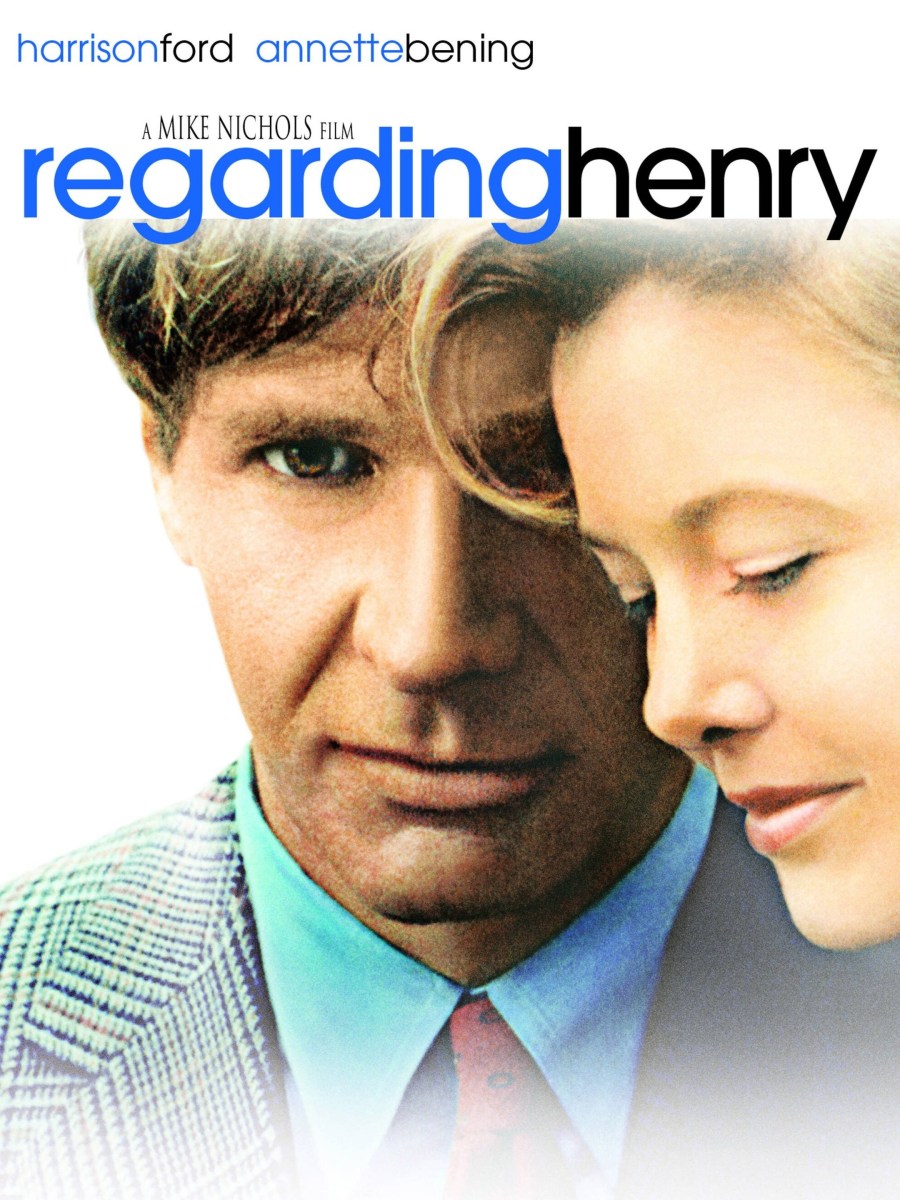
The film Regarding Henry begins with a Manhattan convenience store attack, an attack on the titular character Henry, a ruthless lawyer. He is shot in his torso, resulting in anoxia, and the head, penetrating the frontal lobe. Following this trauma, the film primarily focuses on regaining his memory and reconnecting with his loved ones. Regarding Henry was released in 1991, but, to me, it seems that most of the cinematic tropes related to brain injury haven’t changed in 22 years. Since the progression of time is altered from reality to 2 hours, it does not reflect an accurate timeline. Henry goes from a wheelchair to a walker within the span of 2 scenes. After reading one sentence out loud with his daughter, he has remastered his ability to read. Additionally, I see no professional speech therapy following his hospital stay. (There is also no mention of ongoing physical therapy, though he noticeably has issues with his arm. I guess any scenes involving PT ended up on the editing floor.)
As a brain injury survivor, I found it necessary but frustrating to suspend my knowledge of what a real recovery time is and what it involves. However, while my issue with the film may be with glossing over the recovery, others, specifically professional reviewers, have a different point of view. Roger Ebert remarked that, in 1991, “Genuine issues… are glossed.” Ebert considers financial issues to be the serious ones. While that is true, I would consider family issues to be genuine and serious, as well. In the same vein, Rolling Stone said, “Regarding Henry is Big played seriously, a celebration of arrested development.” However, reviewers should have done their homework. Frontal lobe damage, like a shot in the head, affects a brain’s executive function, resulting in regressive behavior, at least for a bit of time.
_______________________________________________________
Removed from the screen, and more recently, those highly involved in the film have had their brush with brain injury. The film’s star Harrison Ford is rumored to have had a stroke. While I have no insight into this claim, I will say that weight loss when one is getting older is not evidence by itself. Annette Bening had a somewhat recent hospitalization for fear of Lyme Disease. (In 2019, the NIH reported, “The chronic symptoms and disability of TBI and Lyme disease share a similar clinical presentation.”) On the other side of the camera, the film’s writer J.J. Abrams, as the best friend of the Talk About It! founder Greg Grunberg, has voiced his support for Epilepsy Awareness and its destigmatization. (According to the NIH, “Post-traumatic epilepsy (PTE) accounts for 5%–20% of all cases of epilepsy.”)
 TBI on the Screen